Getting Over It Scratch
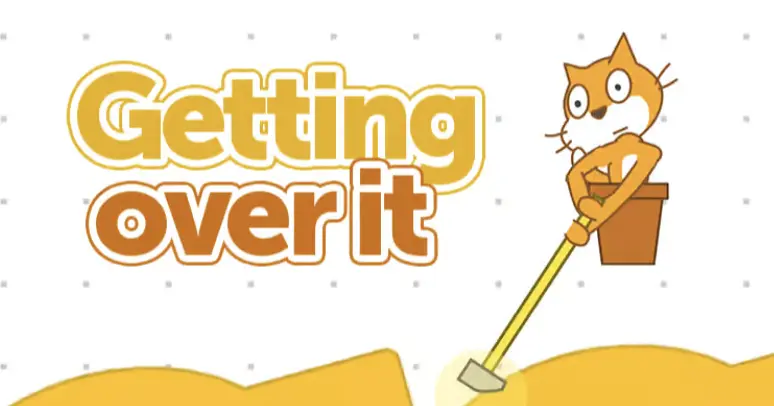
Getting Over It (Scratch) is a fan-made, Scratch-style take on the notorious climbing challenge inspired by the original “Getting Over It.” You control a character using a hammer-like movement system to hook ledges, push off surfaces, and climb upward—while gravity waits to punish every mistake. The Scratch version usually feels a bit lighter and more arcade-like than the original, but the emotional loop is the same: small progress, sudden slips, and the urge to try again. The real skill isn’t speed; it’s precision and calm control. Learning how to place the hammer, when to commit to a push, and how to recover from awkward angles is what turns frustrating falls into satisfying saves. If you enjoy physics-based platformers where mastery comes from repetition and patience, this Scratch remake delivers quick attempts, big reactions, and a surprisingly rewarding “I finally made it!” moment.
How to play
Controls
- Desktop: move your mouse to rotate/position the hammer and control where it hooks.
- Click-and-drag (or hold the mouse button) may be required in some Scratch builds—use the on-screen instructions if available.
- On mobile: touch-and-drag controls may work, but Scratch ports vary; desktop is usually more consistent.
- The goal is controlled movement: hook edges, push off surfaces, and avoid over-swinging into a fall.
Core rules
- Your hammer interacts with the environment: it can hook corners, slide off slopes, or bounce if you apply too much force.
- Most movement comes from pushing against surfaces—small pushes give control, big pushes create risky launches.
- Falling is part of the game; there are usually no checkpoints, so you may lose significant progress.
- Progress is measured by how far you climb; reaching the top (or final area) completes the run.
Goal
Climb as high as possible by hooking ledges and pushing carefully—reach the top without losing control.
Tips & tricks
Why it’s fun
- It turns frustration into progress: every slip teaches you something about angles, hooks, and control, and improvements feel earned.
- Short attempts and dramatic outcomes create a strong ‘one more try’ loop—especially when you save a fall at the last second.