Causal Zap

Draw and Break

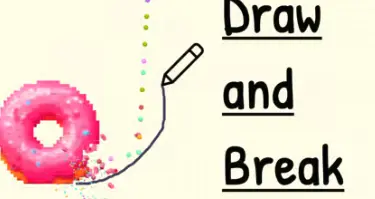
Draw and Break is a physics puzzle game where your drawing becomes the solution. Each level gives you targets to hit or objects to break, and your job is to draw lines or shapes that interact with gravity, momentum, and collisions. A simple stroke can become a ramp, a lever, a stopper, or a falling weight—then the physics engine does the rest. The challenge is efficiency: many levels limit the amount of ink you can use or reward fewer strokes, so you need to think about angles, timing, and where your drawn shape will land. The best solutions look almost effortless, but they come from understanding how objects will roll, bounce, and topple. It’s easy to start because you can experiment instantly, yet it stays interesting because there are usually multiple valid solutions—and a clever one feels great when it works on the first try.
Puzzle Games Instant play
Draw and Break cover
Playing: Draw and Break

How to play

Controls

  • Desktop: click and drag to draw a line or shape; release to place it.
  • Mobile/Tablet: touch and drag to draw; lift your finger to place it.
  • Most levels start simulating physics immediately after you draw (or after you press a start/play button).
  • Use short, simple strokes first—big shapes often waste ink and create unpredictable bounces.

Core rules

  • Your drawings become solid objects that can fall, roll, push, or block other objects.
  • Levels usually require you to break specific targets, knock an object into a goal, or trigger a chain reaction.
  • Some versions limit ink, strokes, or time—running out means you must retry.
  • You win when the objective is completed; you can restart to try a cleaner solution.

Goal

Draw the minimum shapes needed to break targets or trigger the correct physics chain to clear the level.

Tips & tricks

Start small and test one interaction at a time
If you’re unsure, draw a short line to see how objects move first. Once you know the direction and speed, refine with a second stroke instead of drawing a huge shape that creates chaos.
Use angles to control force
A slight slope can turn a gentle roll into a strong push. If a target won’t break, try changing the angle of your ramp or placing the line higher so gravity adds more momentum.
Anchor your drawings when slipping is a problem
If your line slides off a ledge or rotates unexpectedly, draw a tiny ‘hook’ or stopper against a wall so the shape locks in place. This is especially useful on narrow platforms.
Think in chains, not single hits
Many levels are easier if you trigger a sequence (drop → bounce → knock). If you can make one object do multiple jobs, you’ll use less ink and get a cleaner solve.

Why it’s fun

  • Your drawings feel instantly creative—each line becomes a physical tool, and small tweaks can completely change the outcome.
  • It hits a great loop of quick experimentation and satisfying ‘aha’ moments when a clever physics chain works perfectly.

FAQ

How do I play Draw and Break and what’s the main goal?
Draw lines or shapes by dragging with your mouse or finger. Your drawings become solid objects that interact with physics. The goal is to break targets, knock objects into goals, or trigger the required chain reaction to clear each level—often using limited ink or strokes.
Why does my drawing not hit the target even though it looks correct?
Small changes in angle, placement, and timing can drastically affect motion. If you’re barely missing, try placing the line slightly higher (more gravity), adjusting the slope, or shortening the shape to reduce unpredictable bouncing.
What’s the best way to solve levels with an ink or stroke limit?
Start with the smallest possible stroke to test the movement. Then add only what you need. Simple ramps, stoppers, and small weights often work better than large shapes that waste ink and create chaotic physics.
How can I stop drawings from sliding or rotating off platforms?
Use a tiny ‘hook’ or stopper that touches a wall or edge, so the drawing has an anchor point. You can also place the line so part of it rests against a corner, which reduces slipping and rotation.
Are there multiple solutions to the same level?
Usually, yes. Many puzzles allow different approaches—direct hits, ramps, drops, or chain reactions. If one idea fails, try changing the first interaction (where the force comes from) instead of completely redesigning the whole drawing.