Causal Zap

Suika Game

Suika Game (also known as the Watermelon Game) is a physics-based merge puzzle where small decisions quickly snowball into huge combos—or a messy pile that ends your run. You drop fruits into a box; when two identical fruits touch, they merge into the next bigger fruit. The goal is to keep merging up the chain until you create a watermelon, while also managing space so your stack doesn’t overflow. What makes it tricky is the physics: fruits roll, bounce, and wedge into awkward angles, so placement matters as much as matching. Strong runs come from planning your “next two drops,” building stable columns, and using controlled collisions instead of chaotic dumping. It’s easy to learn in seconds, but surprisingly deep once you start optimizing for big merges, cleaner stacks, and high-score streaks.
Puzzle Games Instant play
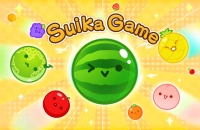
Suika Game cover
Playing: Suika Game

How to play

Controls

  • Desktop: move the fruit left/right with your mouse (or A/D/←/→ if supported), then click/press to drop.
  • Mobile/Tablet: drag left/right to position the fruit, then tap to drop.
  • Fruits fall with physics—expect bouncing and rolling after the drop.
  • Keep an eye on the fill line; if the stack crosses it, the game ends.

Core rules

  • Drop fruits into the container; you cannot pick them up after they land.
  • When two identical fruits touch, they merge into a larger fruit (one step up the chain).
  • Larger fruits take more space and are harder to stabilize, so placement becomes more important over time.
  • The run ends if the fruit pile overflows past the top line (or the game’s limit).

Goal

Merge fruits to create the biggest fruit possible (ideally a watermelon) while keeping your stack under control for a high score.

Tips & tricks

Build a stable base before chasing big merges
Early drops decide your entire run. Place small fruits to form a flat, stable base so later merges don’t roll into chaos. If your base is uneven, big fruits will slide and ruin setups.
Plan two moves ahead
Before you drop, ask: “Where will this fruit roll, and what will it touch next?” If you drop directly onto a slope, it often bounces away and breaks your intended merge.
Use walls as guides, not dumping zones
It’s tempting to stack against one wall, but over-stacking a corner creates tall, unstable towers. Use the walls to stop rolling, then spread the stack across the container.
Save space by merging small fruits quickly
If the top is getting crowded, prioritize merges among small fruits to reduce clutter. Clearing small pieces prevents the late-game ‘no room to place’ problem.

Why it’s fun

  • It’s a perfect blend of chill and tense: relaxing drops early, then dramatic physics moments when a single merge triggers a chain reaction.
  • Every run tells a story—small placement decisions lead to big, satisfying merges and an addictive high-score chase.

FAQ

How do you play Suika Game (Watermelon Game)?
You drop fruits into a container. When two identical fruits touch, they merge into the next bigger fruit. Keep merging up the chain while managing space—if the pile overflows past the top line, the game ends.
What is the best strategy for higher scores?
Build a flat base early, plan placements two moves ahead, and avoid creating tall unstable towers. Prioritize merging small fruits to reduce clutter and preserve space for bigger merges later.
Why do my fruits keep bouncing and ruining merges?
Physics is a core part of the game. Dropping onto slopes or uneven stacks causes bouncing and rolling. Try dropping onto flatter surfaces, use walls to control rolling, and slow down to place more precisely.
How do I prevent game over when the stack gets too high?
Stop adding height and focus on clearing clutter. Merge small fruits quickly, spread the stack across the container, and avoid dumping into a single corner. Creating space is more important than chasing a perfect big merge.
Is Suika Game mostly luck or skill?
There’s randomness in which fruit comes next (depending on the version), but skill matters more. Careful placement, stable stacking, and planning collisions are what separate short runs from high-score runs.